
KRONOS ELITE
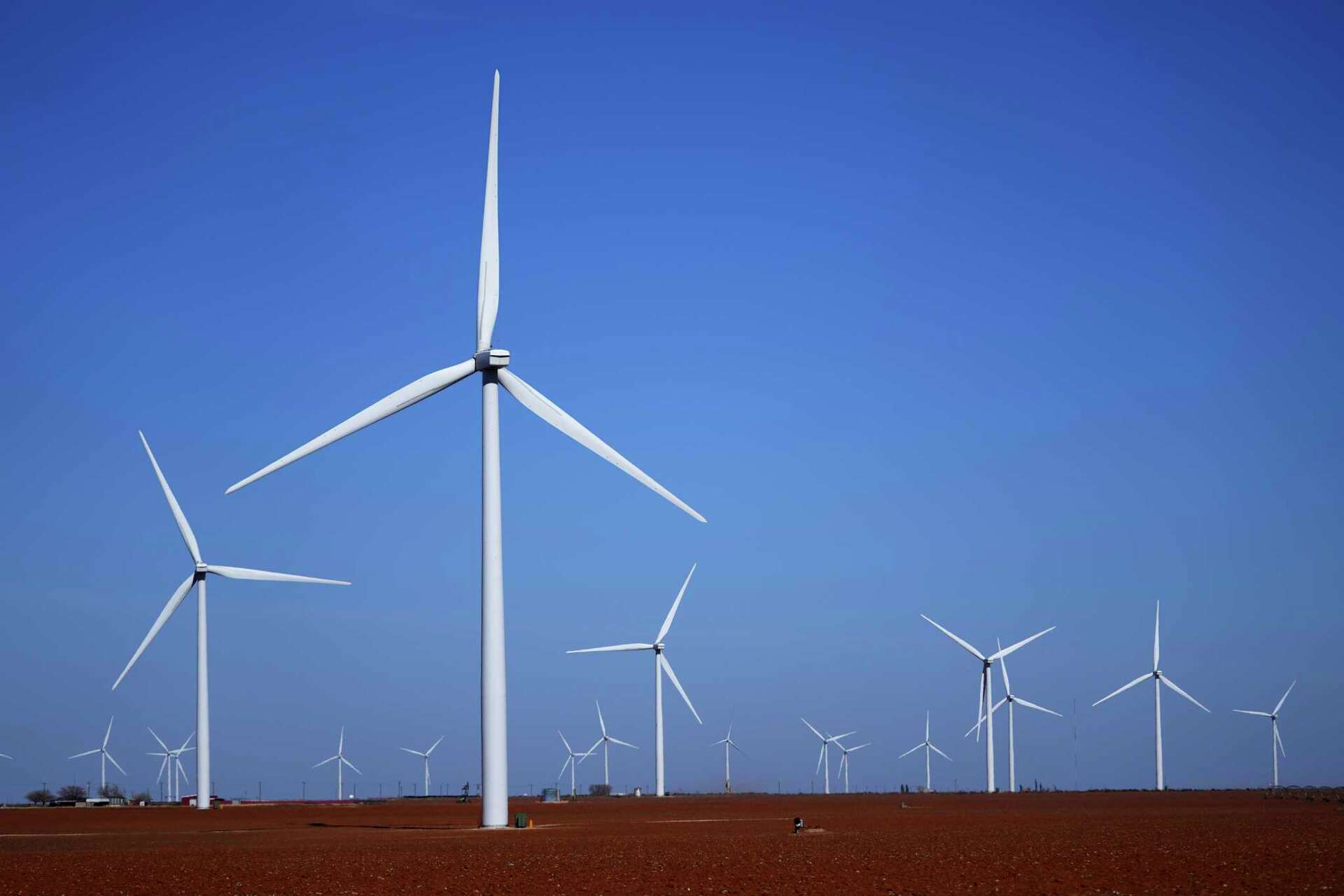
Wind turbines operate in February 2025 in Lamesa. The Defense Department’s stonewalling of roughly 165 proposed wind energy projects in the U.S. — more than 50 in Texas — is in line with President Donald Trump’s false attacks on this form of renewable energy. President Donald Trump is as keen to topple wind energy as Don Quixote is to tilt at windmills. But unlike the fictional Spanish nobleman’s quest to restore chivalry in the early 17th-century La Mancha countryside, there’s nothing noble and plenty nefarious about Trump’s very real assault on facts and our future. The Defense Department, undoubtedly at Trump’s insistence, is working to achieve through stonewalling what the administration could not through other shenanigans: to stop or significantly slow the development of wind energy in the U.S. In Texas, 54 such projects are among 165 nationwide in limbo as the Defense Department claims to still be reviewing them to ensure they don’t impair national security. But those reviews, triggered by proposed structures 200 feet and taller and which federal law requires to be completed within 60 days, have ground to a halt with no reasonable explanation. Not only has the department not cleared a wind project since August, in April it canceled all meetings with wind developers waiting for action, the American Clean Power Association reported. Jason Grumet, CEO of the ACP, told the Associated Press that the backlog is unprecedented, calling it a “de facto moratorium” on new land-based wind energy. While the stalling doesn’t affect CPS Energy’s current energy portfolio, it’s impossible to say how the city-owned utility’s ability to add wind energy might be impaired. The Trump administration’s deployment of the Defense Department as a Kafkaesque obstacle to land-based wind energy projects comes as federal judges have blocked the administration from scuttling multiple offshore ones. After Trump suspended leases in December for five projects under construction off the East Coast, bogusly citing national security, the developers behind those projects sued. The judges assigned saw through the contrived excuses and restored the leases. In the last of those cases to be resolved, Danish energy company Orsted was cleared to resume construction on Sunrise Wind, a solar energy farm designed to power roughly 600,000 homes in New York state. Much like those who presided over the other cases, U.S. District Judge Royce Lamberth found the government’s claim of an imminent security risk that required shutting down Sunrise Wind to be unsubstantiated. What is substantiated is Trump’s disdain for wind power, which goes back years, at least to 2012, when he was unable to block construction of the Aberdeen Bay Wind Farm in Scotland. The project consisted of 11 offshore wind turbines, visible from his Aberdeenshire golf course. He’s entitled to hate wind turbines, just as President George H.W. Bush was entitled to hate broccoli, but animus is neither a legal argument nor the basis for sound energy policy. It seems Trump acknowledges that to some degree as he has manufactured other reasons — some would call lies — for opposing wind power. Great pall of China Trump has tried to taint public opinion of wind energy by tapping into the nation’s general wariness of China, the world’s leading wind turbine manufacturer, suggesting the country is out to sabotage U.S. energy security. “China makes almost all of the windmills, and yet I haven’t been able to find any wind farms in China,” Trump said Jan. 21 during an address at the World Economic Forum in Davos, Switzerland. Instead, he said earlier that month during a meeting at the White House with oil executives: “They make ’em and sell ’em to suckers.” More than a distortion, this is the opposite of the truth. No other country comes close to China in adoption of utility-scale wind energy. By a recent estimate, China ended 2025 with a little more than 690 gigawatts of wind energy generation capacity, accounting for more than half the world’s total, according to Statistica, a global data company. The U.S. had a little more than 160 GW, which isn’t much more than the 130 GW that China added last year, according to the World Wind Energy Association. Unlike the U.S., China doesn’t pit various forms of energy against each other along political and/or ideological lines. It doesn’t have that luxury. China has roughly 28 billion barrels of proven, recoverable crude oil reserves. While that’s not nothing, it’s small change globally, accounting for about 1.6% of the world’s reserves and ranking 13th among all nations. Moreover, it’s estimated that if China had to rely solely on its domestic oil production, it would deplete those reserves in about five years at its current rate of consumption, which is why it’s the world’s largest oil importer. While the MAGA crowd chants “drill, baby, drill,” China lets its wind turbines “turn, baby, turn.” For the birds Among Trump’s most ridiculous claims is that he’s protecting whales and birds by going after wind energy. While the National Oceanic and Atmospheric Administration reported there are “no known links between large whale deaths and ongoing offshore wind activities,” it’s true birds have collided with spinning wind turbine blades. But it’s a lie of omission to cite that as a legitimate reason not to build wind farms, as the leading authority on bird preservation makes clear. As if Trump ever gave a hoot about birds. And even if Trump cared about preserving them — like he claims the Bible is his favorite book — then he’s got his facts jumbled regarding whether wind energy helps or hurts avian life overall. According to the National Audubon Society, the rise in global temperatures poses an “increasing risk of extinction” to two-thirds of North American birds. And guess what can mitigate global warming? Yeah, you got it, and it’s why the Audubon Society supports wind energy. “When done responsibly, developing more land-based wind energy can help protect birds from these escalating threats,” wrote Alice Madden, the Audubon Society’s senior director of climate strategy. She notes that other structures, such as tall buildings, have greater impact, while research has enabled wind energy developers to avoid or minimize risks. Trump should refrain from speaking for environmentalists, considering his contempt for their work and his complete lack of understanding of the very concept. Dead air Trump is not alone in the refrain that wind farms are inherently unreliable because they only produce electricity when the wind blows. Strictly speaking, that’s true, but it overlooks the more relevant measure of how often it produces. Modern wind turbines — by their design, locations in windy regions, and spacing over large areas — generate power roughly 90% of the time, according to the ACP. Saying that the U.S. should shun wind farms because they don’t produce 100% of the time is like saying the Spurs should cut Victor Wembanyama because he was only on the court about 61% of the team’s minutes this season. While wind farms’ outputs vary with wind velocity, those variations are predictable, so on infrequent occasions when they don’t produce, grid managers have time to modulate the output from other sources — like Luke Kornet, Wembanyama’s capable backup. And while Wembanyama was the highest-paid rookie in NBA history, with the cost of wind energy ranging from 2.7 to 8.6 cents per megawatt-hour, it’s become much less expensive than other forms. So with these and other arguments easily debunked, the administration is hiding under the Pentagon’s bureaucracy to shield it from transparency and accountability. And the department’s leaders are always eager to do his bidding. In that regard, Trump and Alonso Quixano — Quixote’s name when he’s not playing knight-errant — have a couple of things in common. Both are delusional about spinning wheels, and both are able to convince others — whether Pete Hegseth or Sancho Panza — to ride with them anyway.

According to The Wall Street Journal, Elon Musk‘s SpaceX and the Pentagon are discussing a leasing agreement under which the company would rent computing capaci...
Read More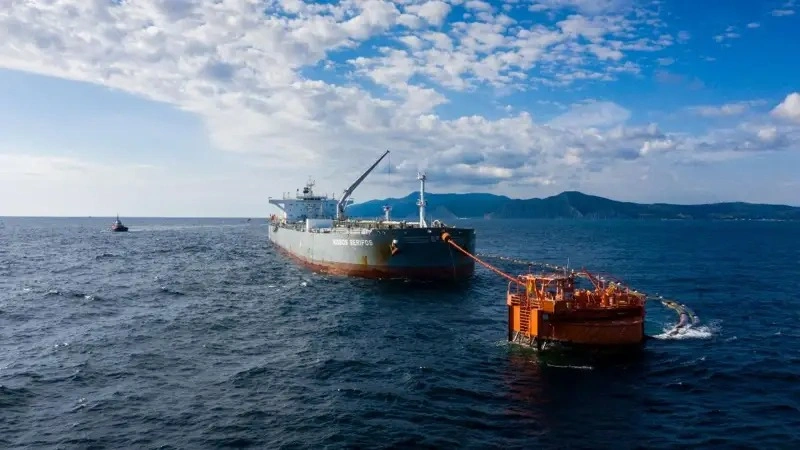
At the Marine Terminal of the Caspian Pipeline Consortium (CPC), two tankers carrying Kazakh oil were struck by drones, forcing a suspension of loading operatio...
Read More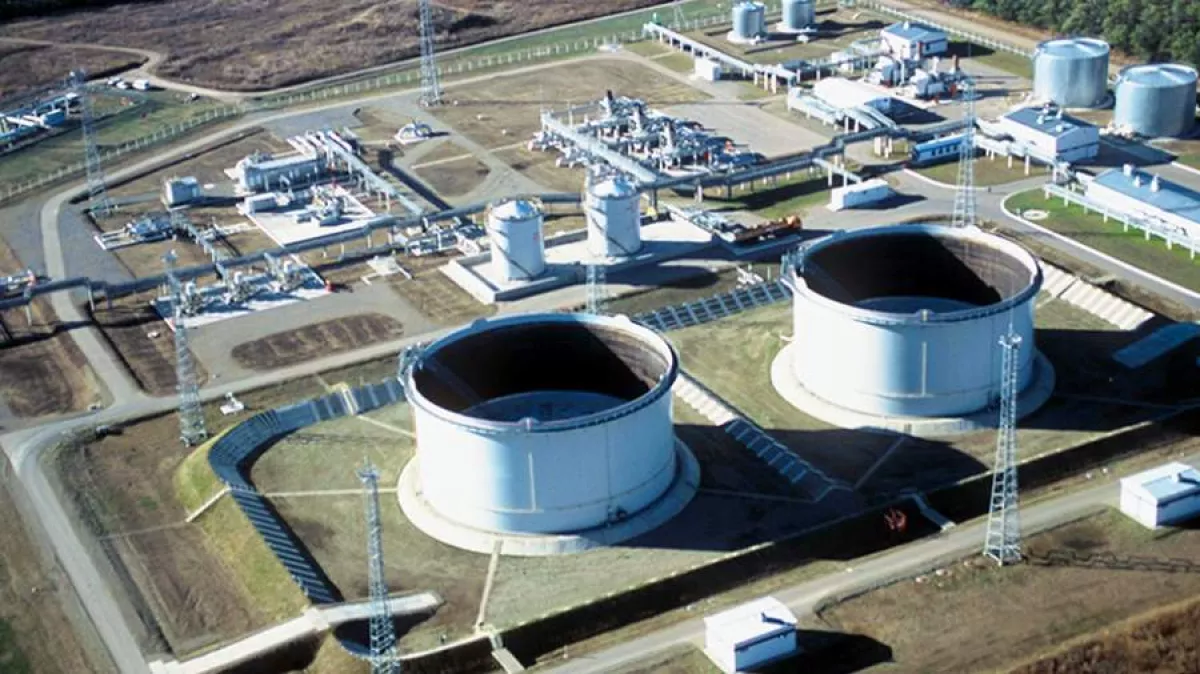
July 2026 13:26 The marine terminal of the Caspian Pipeline Consortium (CPC) came under a drone attack, the consortium said. According to the CPC, oil loading o...
Read More
Space photovoltaic cover glass produced by SCHOTT, a Germany-based manufacturer of radiation-resistant cover glass for satellite solar cells. Credit: SCHOTT WAS...
Read More
Kronos Elite delivers intelligence informed protective services, training, and operational support for governments, multinationals, and critical infrastructure operators in elevated risk environments worldwide.
© Kronos Elite, Operations conducted in accordance with applicable international and national law. Compliance statement.